

Stroke-ISIG 2025 Call for Nominations is CLOSED
An Election Ballot will be sent to each Storke-ISIG member in good standing via Survey Monkey.
Secretary Candidate
 Valerie A. Hill, PhD, OTR/L
Healthy GOALS Life Management Lab in the Division of Occupational Therapy at the Ohio State University
Bio:
Dr. Valerie Hill is an Assistant Professor and Director of the Healthy GOALS Life Management Lab in the Division of Occupational Therapy at the Ohio State University. As an occupational therapist, the first stage of her career focused on motor rehabilitation and training in secondary stroke prevention, rehabilitation intervention trial design, and implementation science methodology. Valerie has devoted the latter stage of her career to manualized intervention development and implementation. In this pursuit, Dr. Hill’s work, funded primarily by the National Institute of Minority Health and Health Disparities, focuses on tailoring stroke-specific life management interventions based on survivors’ stage of recovery, providers’ practice patterns, and healthcare system processes. Through transdisciplinary collaboration and community partnerships, Dr. Hill aims to reduce health disparities, promote health equity, and improve health outcomes for individuals with stroke, and their communities.
Contributions to ACRM:
A cornerstone of her career, Dr. Hill has been involved with ACRM for over 20 years. In her second career stage, Valerie was the Stroke ISIG Early Career Representative (14- 16), and member of the Stroke Movement Task Force (’14- 16) and Living Well After Stroke Task Force (’15-present). She served on the Conference Planning (’14-’16) and Early Career Committees (’14- 20) and was a member of the Integrative Medicine Group (’18-’19) and Gerontology ISIG (’20).
Dr. Hill contributed to the development and delivery of ACRM products, including fact sheets, workshops, white papers, and, notably, over 25 presentations and publications through ACRM and the Archives of Physical Medicine and Rehabilitation.
What I bring to the position: If elected to be the Stroke ISIG Secretary, Dr. Hill will devote her service to the advancement of stroke rehabilitation with a strong sense of purpose, dedication, and leadership to promote high standards of practice, education, and research in stroke.
Member-at-Large Candidate
 Emily Kringle, PhD, OTR/L
School of Kinesiology, University of Minnesota
Bio:
Emily Kringle, PhD, OTR/L is an Assistant Professor in the School of Kinesiology at the University of Minnesota (UMN) where she directs the Disability and WELLness (DWELL) Laboratory. Dr. Kringle also holds an affiliate faculty appointment in the Rehabilitation Science Graduate Program within the University of Minnesota Medical School Department of Family Medicine and Community Health. Dr. Kringle is an occupational therapist who served rehabilitation populations in inpatient rehabilitation and rural skilled nursing homes during the early part of her career. Her clinical experience fuels her ongoing commitment to designing clinically relevant individually tailored interventions that promote physically active and socially engaged lifestyles after stroke. Dr. Kringle has received funding from the National Heart Lung and Blood Institute, the American Occupational Therapy Foundation, and UMN’s Clinical and Translational Science Institute. Dr. Kringle has distinct expertise in phased behavioral intervention design, physical activity behavior change, and clinical trials methodology. Dr. Kringle was the recipient of the 2023 Young Investigator Award in Post-Acute Stroke Rehabilitation.
Your Contributions to ACRM and Your Group (ISIG, NG, Group)
Dr. Kringle has been an ACRM and Stroke ISIG member for 9 years. She was appointed to her current role as co-chair of the Health and Wellness/Living Well After Stroke Task Force in 2019.
Why you would like this position, strength you bring to position
If elected to the role of Member-at-Large, Dr. Kringle will bolster engagement of the stroke community in ISIG’s work and build strategic collaborations across ACRM ISIG and NGs who have synergistic goals. Dr. Kringle has a track record of building community-research partnerships within her research program and effectively collaborating across task forces within the Stroke ISIG. If elected, she will apply these skills to further the impact of our work in the lives of stroke survivors.
Member-at-Large Candidate
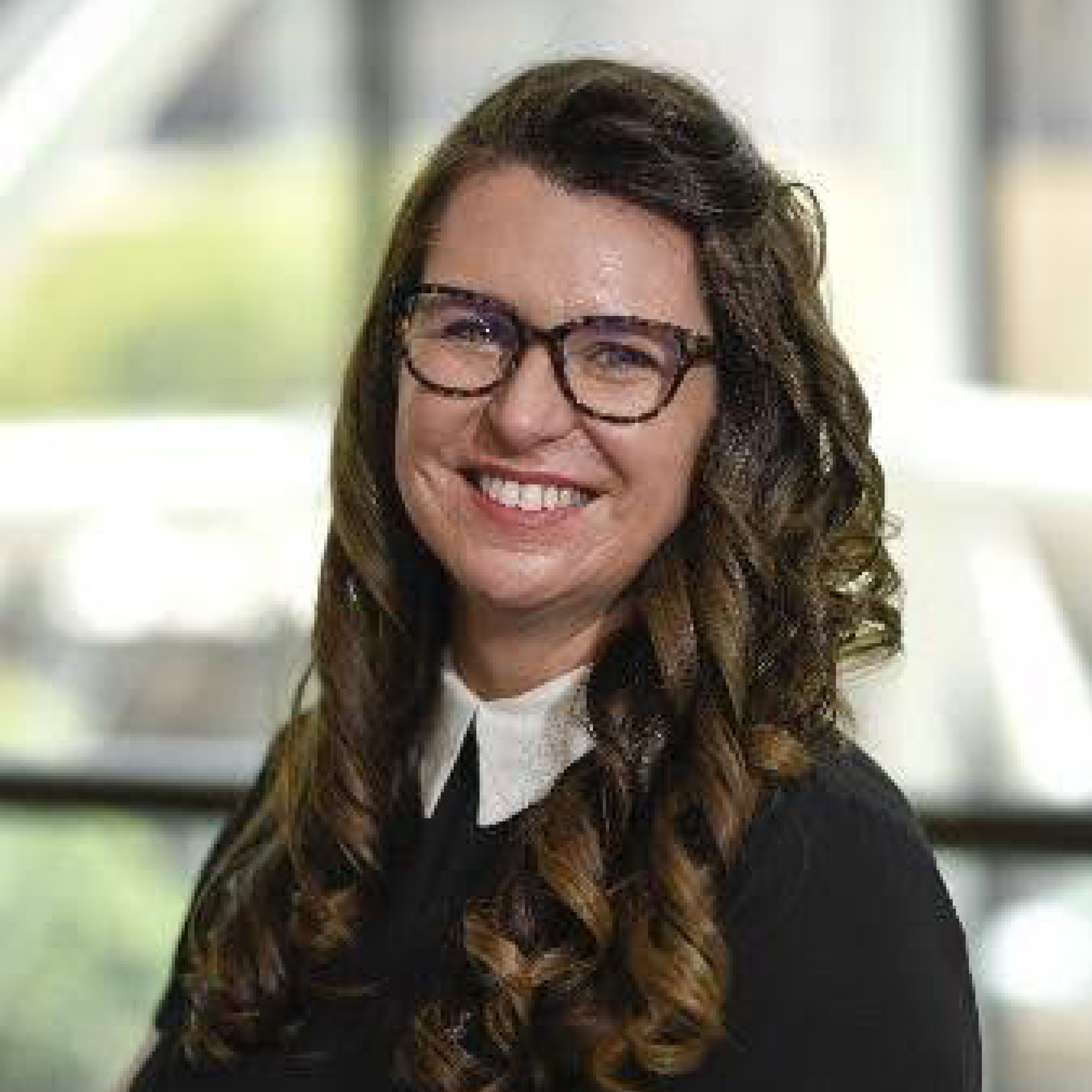 Mandi Sonnenfeld, PhD, MOT, OTR/L
Instructor of Medicine, Section of Health Services Research, Baylor College of Medicine
Implementation, Innovation and Evaluation Program
Center for Innovations in Quality, Effectiveness and Safety (IQuESt)
Research Health Science Specialist, Michael E. DeBakey Veterans Affairs Medical Center
Bio:
Dr. Sonnenfeld is a Research Health Science Specialist at Michael E. DeBakey Veterans Affairs Medical Center, where she directs projects with the national Neurology Program Office including improving stroke quality metrics across the Veterans Health Administration nationwide. Dr. Sonnenfeld is an Instructor of Medicine in the Implementation, Innovation and Evaluation Program at the Center for Innovations in Quality, Effectiveness, and Safety. A clinical occupational therapist by training, she has extensive experience working with stroke patients across various care continuums, including acute care hospitals, inpatient rehabilitation facilities, skilled nursing facilities, and home and community environments.
Currently as a full-time researcher and quality improvement specialist, she is committed to increasing the quality of stroke care and decreasing disability for individuals affected by stroke. Dr. Sonnenfeld is leading several stroke-specific research projects and clinical initiatives, including the quality improvement of the National Telestroke Program and efforts to sustain stroke evidence-based practices within the VA nationally. She has recently been awarded project funding from the VA to improve stroke quality reporting through application of a learning health system and stroke metric dashboard development. Dr. Sonnenfeld has a wide variety of research interests with a particular focus on implementation science and learning health systems.
Contributions to ACRM:
She has belonged to ACRM for 10 years and the Stroke-ISIG for nearly 4 years. If elected to the office of Stroke-ISIG Member-at-Large position, Dr. Sonnenfeld will devote full commitment to this important role including supporting activities that promote collaboration, enthusiasm and knowledge of stroke care and rehabilitation. Dr. Sonnenfeld is excited to contribute her expertise with stroke care and rehabilitation research to the Stroke ISIG to improve the lives of stroke survivors.
2025 Elections are in Process for the following positions: Roles & Responsibilities
Secretary
Responsibilities: In collaboration with the ACRM representative assigned to the committee, the Secretary shall maintain a correct and permanent record of the meetings and transactions of the Stroke -ISIG including minutes of all meetings, reports, correspondence by Stroke -ISIG officers, budget, committee and task force reports, list of attendance at annual meetings, and membership records and the like on a centralized data system supported by the ACRM National Office. The secretary will also oversee the minutes of the meeting are being recorded and an attendance sheet circulated or captured including sending minutes to Stroke-ISIG members and the ACRM national office.
The Secretary will assume responsibility for reviewing and preserving the Stroke-ISIG Rules of Governance with regard to legality, integrity, and consistency within itself and with the existing by-laws of the ACRM and preparation of modifications in appropriate form for the membership’s input and approval.
Term: holds office for two (2) years. This position can be extended for two (2) optional two-year terms if agreed upon by the secretary and nominating committee and voted upon by the general membership.
Communications Officer
Responsibilities: The Communication Officer will lead and appoint members to the Media and Marketing Committee to assist with communication using print, electronic, website, and social media and other strategic initiatives. The Communications Officer will assume the role of editor of Stroke Matters, the official newsletter of the Stroke-ISIG.
The Communications Officer will be responsible for assuring that the content of Stroke Matters, the official newsletter of the Stroke-ISIG, is reflective of the purpose of the Stroke-ISIG and consistent with professional standards for periodical literature as well as assuring the timely distribution of Stroke Matters on a bi-annual basis.
The Communications Officer in coordination with the ACRM National Office will be responsible for assuring that the content of the Stroke-ISIG portion of the ACRM website is up to date and reflective of the mission and activities of the Stroke-ISIG. Additionally, the Communications Officer in coordination with the ACRM National Office will be responsible for the establishment and maintenance of communication using social media, as deemed necessary by the Stroke-ISIG membership. Finally, the Communications Officer in coordination with the ACRM National Office and Stroke-ISIG Executive Committee will evaluate and respond to dissemination requests for Stroke-ISIG related activities and research. This would include determination of appropriateness of the request and facilitation/coordination.
Term: The Communications Officer holds office for two (2) years. This position can be extended for two (2) optional two-year terms if agreed upon by the Communications Officer and nominating committee and voted upon by the general membership.
Member at Large
Responsibilities: The Member-at-Large will be responsible for coordinating the annual Stroke Hot Topics presentation at the Annual Meeting and will provide consultation with the Stroke -ISIG Executive Committee. The second Member-at-Large position will assist with carrying out special projects as assigned and needed by the Stroke ISIG.
Term: holds office for two (2) years. This position can be extended for two (2) optional two-year terms if agreed upon by the Member-at-Large and nominating committee and voted upon by the general membership. There will be two Member-at-Large positions.